CARAMS
CARAMS
  • Home
  • Registration
  • Invited Speakers
  • Abstract
  • Participants
  • Previous Events
  • Contact
  • More
    • Download Brochure
    • Make Payment
    • Download Abstract Template
    • Places to visit
    • How to Reach
  • Login
  • Sign Up

If the participants do not belong to the PRC Category or if participants are not required to visit ‘Restricted’ or ‘Protected’ areas in India, or areas affected by terrorism, militancy, extremism, etc., then there is no need to take prior permission.

  • Click here to avail the information about the Event clearance and Political clearance from MHA/MEA, Govt. of India
  • The NOC Letter from the Ministry of Home Affairs, Govt. of India may be downloaded here: https://conference.mha.gov.in/events/NOC_letter.pdf.
  • To download the screenshot of guidelines for security/event clearance click here.

Please note that the participants (requiring accommodation) who register before November 15, 2025 will be prioritized during the allotment of the accommodation.

International Conference on Linear Algebra and its Applications
(ICLAA 2025)

December 17 - 20, 2025

Centre for Advanced Research in Applied Mathematics and Statistics, MAHE, Manipal, India

Endorsed By International Linear Algebra Society
Logo
Register Download Brochure Abstract Template

Purpose

The present conference ICLAA 2025, the sixth in its sequel, shall provide a platform for leading Mathematicians and Statisticians, working around the globe in the theme area to discuss several research issues and to introduce new innovations. The main goal of the conference is to bring experts, young researchers, and students together to present recent developments in this dynamic and important field. The conference also aims to stimulate research and support the interaction among the scientists by creating an environment for the participants to exchange ideas and to initiate collaborations and professional partnerships.

On behalf of the Scientific Advisory Committee, and the Local Organizing Committee, we have much pleasure in extending a cordial invitation to participate in this conference.

The theme of the conference shall focus on but not limited to

  • Classical Matrix Theory and Linear Algebra
  • Nonnegative Matrices and Special Matrices
  • Matrices and Graphs
  • Combinatorial Matrix Theory
  • Matrix Methods in Statistics
  • Linear Statistical Inference
  • Matrices in Error Analysis and its Applications
  • Matrix and Graph Methods in Applied Sciences

Linear Algebra and Graph Theory are important branches of Mathematics having applications in every branch of science. The topic ‘Matrix Methods in Statistics’ is a branch of Linear Algebra and Matrix Theory containing a variety of challenging problems in Linear Statistical Models and Statistical Inference, having applications in various branches of Applied Statistics such as Natural Sciences, Medicine, Economics, Electrical Engineering, Markov Chains, Digital Signal Processing, Pattern Recognition and Neural Network, to name a few. Advances in Combinatorial Matrix Theory are motivated by a wide range of their applications in the subjects such as Networks, Chemistry, Genetics, Bioinformatics, Computer Science, and Information Technology. The areas of Classical Matrix Theory and Combinatorial Matrix Theory interact with each other, which is evident from the interplay between Graphs and Matrices. Generalized Inverses of Matrices such as the Incidence Matrix and Laplacian Matrix are mathematically interesting and have great practical significance. Covariance Matrices play an important role in the study of uncertainty associated with data related to measurements, which is an important part of applied Mathematics and Statistics.

This conference is in sequel to the conferences CMTGIM 2012, ICLAA 2014, ICLAA 2017, ICLAA 2020(21), and ICLAA 2023 held in Manipal during January 2012, December 2014, December 2017, December 2021, and December 2023, resepctively. The present conference shall provide an avenue for leading Mathematicians, Statisticians, and scientists working in the applied area, who are working around the globe in the theme area to get together in the physical space, interact each other, discuss several research issues and to introduce new innovations. The ICLAA 2025 is expected to stimulate research and benefit the young scholars from the interaction with leading linear algebraists. The physical participation in the conference will be creating an environment for experts and young scholars to exchange ideas, and to initiate collaborations and professional partnerships. Besides organizing invited talks from eminent speakers, organizers invite the participants to present their research work in the sessions of contributory talks.

Preconference workshop; IWSMGA 2025

Preconference workshop `International Workshop on Special Matrices, Graphs, and Applications’ will be held during December 10-16, 2025. The workshop is aimed at training young students, scholars, and faculty interested in the focus area of special matrices, graphs, and their applications. Sessions in the workshop include lectures, tutorials and discussion on recent research trends in special matrices and graphs by Abraham Berman, Stephen J Kirkland, Simo Puntanen, T E S Raghavan, S K Neogy, Sukanta Pati, Sivaramakrishnan Sivasubramanian and other leading personalities of the subject. Conference participants may seek participation in the workshop. The number of participants in the workshop is restricted. Participants who could gain the benefit from the course will be chosen as the applications arrive. The course conducted in the workshop will carry a credit of two.

For more details about the workshop, please visit: IWSMGA 2025.

Workshop and conference are organized by the CARAMS, MAHE in association with Department of Mathematics, MIT, MAHE and Department of Data Science, PSPH, MAHE.

Welcoming and Inclusiveness Statement

Centre for Advanced Research in Applied Mathematics and Statistics (CARAMS) was established in September 2018 at Manipal Academy of Higher Education, Manipal. MAHE, Manipal, an institution of eminence, is a deemed to be university and comprised of students from fifty-seven nations around the globe. CARAMS has been established with the objectives of fostering advanced research and training in Mathematics, Statistics, and their applications. Also, it organizes national and international workshops and conferences in the focus area which help the promotion of Mathematics and Statistics in the university and in the region.


CARAMS, MAHE offers a welcoming and inclusive environment to all participants in its activities, including all its meetings and conferences, irrespective of gender, gender identity or expression, sexual orientation, race, color, national or ethnic origin, religion or religious belief, age, marital status, disabilities, and field of expertise.


CARAMS strives to foster an apolitical atmosphere that encourages the free expression and exchange of ideas, free from all forms of discrimination, harassment, and retaliation, and that is welcoming and safe to all members and to those who participate in its activities. If you feel harassed or unsafe in any way because of the actions, words, pictures, or expressions of any other member or participant, we encourage you to bring this to the attention of the CARAMS or MAHE authority.


Meadia Partners

International Conference on Linear Algebra and its Applications

December 17 - 20, 2025

Registration

If the participants do not belong to the PRC Category or if participants are not required to visit ‘Restricted’ or ‘Protected’ areas in India, or areas affected by terrorism, militancy, extremism, etc., then there is no need to take prior permission.

  • Click here to avail the information about the Event clearance and Political clearance from MHA/MEA, Govt. of India
  • The NOC Letter from the Ministry of Home Affairs, Govt. of India may be downloaded here: https://conference.mha.gov.in/events/NOC_letter.pdf.
  • To download the screenshot of guidelines for security/event clearance click here.

Please note that the participants (requiring accommodation) who register before November 15, 2025 will be prioritized during the allotment of the accommodation.

How do I Register?

Online Registration

Register online in our portal using the following link and pay the registration fee, if applicable, by the payment portal available in our site under "Make Payment".

Register Online Here
Deadlines (both ICLAA & IWSMGA)
    • For early bird registration: October 31, 2025
    • Abstract submission: November 15, 2025
Registration Fee
Category Conference Workshop
On or before October 31, 2025       After October 31, 2025       On or before October 31, 2025       After October 31, 2025      
Foreign Delegates (FD) 350 $/ 330 € # 400 $/ 370 € # 110 $/ 100 € # 135 $/ 125 € #
Foreign Accompanying 110 $/ 100 € 110 $/ 100 € 110 $/ 100 € 135 $/ 125 €
Indian Scholar/Faculty (ISF)     4000 INR + GST # 4500 INR + GST # 1000 INR + GST * 1500 INR + GST *
Indian Students ** 1000 INR + GST * 1000 INR + GST * 1000 INR + GST * 1000 INR + GST *
Indian Accompanying 1000 INR + GST 1000 INR + GST 1000 INR + GST 1000 INR + GST

NOTE: Accompanying persons are not allowed for students, participants, and contributory speakers. Accompanying persons are allowed only for invited speakers in exceptional cases.

# : The registration fee covers accommodation at Hostel/International Guest House, MAHE, registration kit, breakfast, working lunch, and welcome dinner on 16th December. Please note that registration fee is not refundable in any circumstance.

* : The amount excludes accommodation charges, which is to be paid as per norm.

** : Indian students or research scholars not having any financial support of fellowship/salary. (Participants registering under this category must produce a letter of recommendation from their supervisor/HOD stating that the candidate has no fund support from any funding agencies. Kindly mail the recommendation letters to carams@manipal.edu or to km.prasad@manipal.edu.)

Invited speakers are eligible for a registration fee waiver for the events to which he/she is invited

After successful registration, INDIAN PARTICIPANTS may pay the registration fee via the payment link (For the payment link visit My Page -> Event registered -> Select the event -> Payment).

For FOREIGN PARTICIPANTS: The payment of the registration fee in foreign currency through bank transfer requires an invoice from the MAHE Finance department. Please note that the invoice consists of a QR code, which could be used for payment of your registration fee. So, you are requested to send the following email to CARAMS, MAHE (carams.mahe@gmail.com):

Dear Finance Officer

I have registered for ICLAA 2025/IWSMGA 2025 with a unique ID as given below. Kindly send me an invoice for the payment for ———– (mention the amount specified on the CARAMS website in dollars/euros) towards the registration fee.

Full Name:
Email:
Full Permanent Address:
Unique ID:
Amount:
Mode of Participation: Offline


Accommodation: Accommodation from the organizer will be arranged, if required, for the duration starting from the evening before the event and up to morning after the event.

CARAMS aims at supporting the travel and registration of senior and young scientists not having the fund
support to present the paper, on the request made before November 30, 2025. However, such support (which
could be partial) will be provided depending on the fund support received from the different organizations.

International Conference on Linear Algebra and its Applications

December 17 - 20, 2025

Abstract Submissions

If the participants do not belong to the PRC Category or if participants are not required to visit ‘Restricted’ or ‘Protected’ areas in India, or areas affected by terrorism, militancy, extremism, etc., then there is no need to take prior permission.

  • Click here to avail the information about the Event clearance and Political clearance from MHA/MEA, Govt. of India
  • The NOC Letter from the Ministry of Home Affairs, Govt. of India may be downloaded here: https://conference.mha.gov.in/events/NOC_letter.pdf.
  • To download the screenshot of guidelines for security/event clearance click here.

Please note that the participants (requiring accommodation) who register before November 15, 2025 will be prioritized during the allotment of the accommodation.

Abstract Template
Download Abstract Template

Abstract template: Abstract Template – ICLAA 2025

International Conference on Linear Algebra and its Applications

December 17 - 20, 2025

Speakers

If the participants do not belong to the PRC Category or if participants are not required to visit ‘Restricted’ or ‘Protected’ areas in India, or areas affected by terrorism, militancy, extremism, etc., then there is no need to take prior permission.

  • Click here to avail the information about the Event clearance and Political clearance from MHA/MEA, Govt. of India
  • The NOC Letter from the Ministry of Home Affairs, Govt. of India may be downloaded here: https://conference.mha.gov.in/events/NOC_letter.pdf.
  • To download the screenshot of guidelines for security/event clearance click here.

Please note that the participants (requiring accommodation) who register before November 15, 2025 will be prioritized during the allotment of the accommodation.

Dr. Rafikul Alam
Professor
Indian Institute of Technology Guwahati, India

Research Interests: Perturbation theory for linear operators, Structured perturbation theory for matrices, Nonlinear eigenvalue problems, Multiparameter eigenvalue problems. Read more
Achievements: Currently Prof. Rafikul Alam is working as a professor in the department of Mathematics, Indian Institute of Technology… Read more
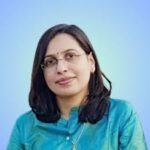
Structure-preserving deflation of critical eigenvalues in quadratic eigenvalue problems associated with damped mass-spring systems

For a quadratic matrix polynomial associated with a damped mass-spring system there are three types of critical eigenvalues, the eigenvalues $\infty$ and $0$ and the eigenvalues on the imaginary axis. All these are on the boundary of the set of (robustly) stable eigenvalues. For numerical methods, but also for (robust) stability analysis, it is desirable to deflate such eigenvalues by projecting the matrix polynomial to a lower dimensional subspace before computing the other eigenvalues and eigenvectors. We describe structure-preserving deflation strategies that deflate these eigenvalues via a trimmed structure-preserving linearization. We employ these results for the special case of hyperbolic problems. We also analyze the effect of a (possibly low rank) parametric damping matrix on purely imaginary eigenvalues.

Dr. Sasmita Barik
Professor
Indian Institute of Technology, Bhubaneshwar, India

Research Interests: Combinatorial Matrix Theory; Spectral Graph Theory Read more
Achievements: Dr. Sasmita Barik is a Professor in Mathematics, at the Department of Mathematics, Indian Institute of Technology Bhubaneswar,… Read more

On integer matrices with integer eigenvalues and Laplacian integral graphs

A matrix $A$ is said to be an integer matrix if all its entries are integers. We prove that a nonsingular integer matrix $A$ has integer eigenvalues if and only if $A^{-1}$ can be written as the sum of $n$ rank-one matrices that meet certain requirements. A method for constructing integer matrices with integer eigenvalues using the Hadamard product is also provided. Let $S$ represent an $n$-tuple of nonnegative integers. If there is an $n\times n$ integer matrix $A$ whose spectrum is $S$, we say that $S$ is realisable by an integer matrix. In [On graphs whose Laplacian matrices have distinct integer eigenvalues, Journal of Graph Theory, 50(2):162–174, (2005)], the Fallat et al. posed a conjecture that “there is no simple graph on $n\geq 2$ vertices whose Laplacian spectrum is given by $(0, 1,\ldots,n-1)$.” We provide a characterization of threshold graphs using the spectra of quotient matrices of its $G$-join graphs. As a consequence, we prove that given any $n-1$ positive integers $\lambda _{2},\ldots ,\lambda _{n}$ such that $\lambda _{2}\leq \cdots \leq \lambda _{n}$, the $n$-tuple $(0,\lambda _{2},\ldots ,\lambda _{n})$ is realizable by the Laplacian matrix of a multidigraph. In particular, we show that $(0, 1,\ldots ,n-1)$ can be realizable by the Laplacian matrix of a multidigraph. This is a joint work with Subhasish Behera.

Dr. Abraham Berman
Emeritus Professor
Technion-Israel Institute of Technology, Israel

Research Interests: Matrices, Graphs and the connections between the two Read more
Achievements: Abraham Berman received his B.Sc. (1966) and M.Sc. (1968) in mathematics from the Technion. In 1970 he received… Read more

Tn,k (k>1) and T(n,k) are determined by their spectrum.

The graph of pyramids Tn,k (k>1) is a collection of n-k pyramids, each of which is a complete graph of k+1 vertices, sharing Kk as a common base. The Turan graph T(n,k) is a complete k-partite graph with n vertices where the sizes of the sizes of the parts are as equal as possible.

In the talk we will prove that the graphs of pyramids are determined by the spectrum of their adjacency matrix and give a new proof of a similar result for the Turan graphs.

The talk is based on joint work with Igal Sason, Noam Krupnik and Suleiman Hamud.

Dr. Susmita Datta
Professor
University of Florida, Gainesville

Research Interests: Methodological: Bioinformatics, Clustering and Classification, Genomics, Proteomics, Infectious Disease Modeling, Non-linear Regression modeling for Systems Biology, Statistical Issues… Read more
Achievements: Susmita Datta has received her PhD degree in Statistics from the University of Georgia, Athens, Georgia, USA followed… Read more

Integrating multi-omics data with joint graph-regularized Single-Cell Kullback-Leibler Sparse Non-negative Matrix Factorization (jrSiCKLSNMF) method

Recent advancements in multi-assay single-cell omics technologies have made it possible to collect multiple layers of molecular information from the same individual cells. Each omics modality—such as transcriptomics, epigenomics, or proteomics—offers a distinct perspective on cellular identity and function. Integrating these diverse data types holds significant potential for uncovering deeper and more comprehensive insights into complex cellular processes. However, modeling single-cell multi-omics data presents substantial challenges due to its high dimensionality, inherent sparsity, and technical noise.

To address these challenges, we introduce a novel integrative analytical framework “joint graph-regularized Single-Cell Kullback-Leibler Sparse Non-negative Matrix Factorization (jrSiCKLSNMF)—pronounced “junior sickles NMF.” This method is specifically designed to extract biologically meaningful latent factors that are shared across multiple omics modalities within the same set of single cells. By incorporating graph-based regularization, our approach leverages known relationships among cells to preserve local manifold structures, enhancing the interpretability and biological relevance of the learned factors.

Our implementation includes an efficient multiplicative update scheme that allows scalable computation even for large-scale datasets. We rigorously evaluated jrSiCKLSNMF on synthetic datasets generated using third-party simulation tools. Across a range of benchmarking scenarios, our method consistently outperformed several state-of-the-art approaches in terms of clustering accuracy and robustness.

Moreover, when applied to a real-world multi-assay single-cell omics dataset, jrSiCKLSNMF achieved clustering results that aligned well with known biological annotations, demonstrating its potential utility in practical applications. The method’s ability to integrate heterogeneous omics layers while maintaining sensitivity to subtle cell-type differences makes it a valuable tool for advancing our understanding of cellular heterogeneity in health and disease.

Dr. Biswajit Deb
Associate Professor
Sikkim Manipal Institute of Technology, Sikkim, India

Research Interests: Motion Planning Problem, Spectral Graph Theory Read more
Achievements: Read more

Linear Programming Approach for Domination Problems in Graphs with a Focus on $P_3$-Convex Domination

Domination problems form a central theme in graph theory, with applications ranging from communication networks to decision-making systems. In particular, the notion of $P_3$-convex domination captures interesting structural properties based on paths of length two. This talk presents a linear programming perspective to model and study such domination problems. We outline integer linear programming formulations that incorporate convexity constraints in a natural way. Relaxations of these formulations yield useful bounds and algorithmic insights. The approach provides an algorithm for integer linear programming (ILP) formulation of $P_3$-convex domination problem. Illustrative examples on graphs of varying classes will be discussed to highlight the methodology. Computational aspects and related challenges of $P_3$-convex domination will also be discussed.

Dr. N. Eagambaram
Former Deputy Director General
Indian Statistical Service (Retired), Government of India

Research Interests: Generalized Inverses of Matrices and Linear Complimentarity Problem Read more
Achievements: N.Eagambaram completed his M. Sc. in Statistics from Annamalai University in 1976. He worked as Lecturer in Statistics… Read more

Disjoint sections of positive semi-definite matrices and their applications in Gauss Markov Models

A generalized inverse of $A$ is a matrix $X$ that satisfies $AXA = A$. Square matrices $A$ and $C$ of the same order are disjoint if the column spaces of $A$ and $C$ as well as row spaces are disjoint. $C$ is a complement of $A$ if $A$ and $C$ are disjoint and $A+C$ is nonsingular. Any g-inverse of $A$ can be obtained from $(A+C)^{-1}$ by suitably choosing complement $C$ of $A$. This method is called the Inverse rank Complemented Matrix (ICM) method. In the general Gauss-Markov model (GGM), $y = X\beta + \epsilon$ where $y$ and $\epsilon$ are vector random variables, $X$ is a design matrix, and $\sigma ^{2}G$ is a singular covariance matrix of the vector random variable $\epsilon$, $y$ can be split into four mutually uncorrelated random variables as $y = y_{1} + y_{2} +y_{3} +y_{4}$ by splitting $G$ into disjoint sections. Estimates of linear functions of $\beta$ under linear constraints with optimal properties follow as simple linear functions of the above four components. In this article, we demonstrate how various analytical issues widely discussed in the GGM literature can be resolved using the four components of $y$. We observe that the ICM method is a simple and direct method to analyze GGM as against the IPM method of inverting a partitioned matrix introduced by C. R. Rao.

Dr. Shaun M. Fallat
Professor and Head
University of Regina, Canada

Research Interests: Matrix Theory, Discrete Mathematics, Graph Theory, Combinatorial Matrix Analysis Read more
Achievements: He has written a book titled 'Totally Nonnegative Matrices' which was published by Princeton University Press. He has… Read more

Maximizing the Nullity of a Graph

Given a graph $G=(V,E)$ and a collection $\mathcal{C}$ of matrices associated with $G$, we consider maximizing the nullity over all matrices in $\mathcal{C}$. Colin de Verdi\`ere demonstrated that the maximum nullity associated with a certain collection of weighted Laplacian matrices is intimately related to the topology of a graph. In his work, for example, he developed an algebraic characterization of planar graphs! In this talk, we focus on the class, denoted by $S(G)$, of all real (square) symmetric matrices, $A=[a_{ij}]$ indexed by the vertices of $G$ in which for $i \neq j$, $a_{ij}\neq 0$ whenever $i ~ j$. For any symmetric matrix $n \times n$ $A$, we define the inertia of $A$ to be the triple ${\rm in}(A) = (p,q,v)$, where $p$ is the number of positive eigenvalues of $A$, $q$ is the number of negative eigenvalues of $A$ and $v=n-(p+q)$ is the nullity of $A$. For a graph $G$ on $n$ vertices, partition the set $S(G)$ into subsets $S_{q}(G) = \{ A \in S(G): {\rm in} (A)=(\cdot, q, \cdot)\}$ (i.e., the matrices in $S(G)$ with exactly $q$ negative eigenvalues), where $0 \leq q \leq n$. Define $M_q(G) = \max\{ {\rm nul}(A) : A \in S_q(G)\}$. In general terms, the main objective is to determine $M_q(G)$ for all such $q$ for a fixed graph or, more generally, a graph family.

In this lecture, we will review existing research on parameters $M_q$ for various families of graphs, including trees and threshold graphs. In addition, we will discuss the positive semi-definite case ($q=0$) or, equivalently, the minimum rank over all faithful orthogonal representations of a graph. finally, connections to zero forcing analogs and implications to the inverse inertia problem for graphs will also be highlighted.

Dr. Chengcheng Hao
Associate Professor
Shanghai University of International Business and Economics, China

Research Interests: Multivariate longitudinal data analysis, linear models, statistical diagnostics Read more
Achievements: Prof. Chengcheng Hao is an associate professor in School of Statistics and Information, Shanghai University of International Business… Read more

Dr. Stephen J. Haslett
Professor Emeritus & Director
Massey University, New Zealand

Research Interests: Mathematical Statistics, Medicine, Health Sciences, Psychology, Human Development, Political Science, History, the Humanities, Social Sciences, Zoology, Botany, Marine… Read more
Achievements: Stephen J. Haslett is a former Professor and Director of the Statistical Consulting Unit. He is a Fellow… Read more

Dr. Surender Kumar Jain
Emeritus Professor
Ohio University, USA

Research Interests: Algebra, Linear Algebra Read more
Achievements: Distinguished Professor S. K. Jain served Ohio University, Department of Mathematics from 1970 to 2009. He also served… Read more

Algebras in which zero divisors are product of idempotents

The talk addresses research mathematicians and graduate students in algebra, combinatorics and functional analysis. The main objective is the study of algebras in which non-units or zero divisors can be expressed as a product of idempotents. This question originated in a 1966 paper by J. M. Howie who showed, among other things, that non-injective mappings from a finite set into itself are products of idempotents. This was followed in 1967 by J. A. Erdos who proved the analogous result for singular matrices over a field. In 1975, P .R. Halmos asked a question whether a singular matrix over a field can be expressed as a product of nilpotent matrices. This was answered by Sourour and later by R.P. Sullivan in 2008 as an application of the result that such matrices are product of idempotents. We say that an algebra R has the IPn property if each n ×n matrix over R with nonzero left and right annihilators, is a product of idempotent matrices. We say that an algebra has the IP property if it has IPn property for every n ≥ 2. Laffey’s proved that every Euclidean domain has the IP property. We have shown that a singular {0,1}-matrix over an integral domain of characteristic zero is a product of idempotents. It is also known that for commutative principal ideal domain the IP property is equivalent to the IP2 property. Moreover, for a right and left Bezout domain the IP2 property is equivalent to the IP property. We show that if a projective-free ring R has the IPn property for some n ≥ 1, then R is a domain. The question of representing a singular matrix over a von Neumann regular ring as a product of idempotents is related to a long-standing open question: whether there exists a von Neumann regular ring that is not separative. The conditions for representing a non-injective bounded linear operators on Banach spaces as products of idempotents are also obtained.

Dr. Sachindranath Jayaraman
Associate Professor
Indian Institute of Science Education and Research Thiruvananthapuram

Research Interests: linear algebra and matrix analysis Read more
Achievements: Read more

Quaternion matrix polynomials: location of eigenvalues

A right quaternion matrix polynomial is an expression of the form $P(\lambda) = \displaystyle \sum_{i=0}^{m}A_i \lambda^i$, where $A_i \in M_n(\mathbb{H})$ with $A_m \neq 0$, where $M_n(\mathbb{H})$ is the set of all square matrices from the ring of quaternions. A quaternion $\lambda_0 \in \mathbb{H}$ is a right eigenvalue of $P(\lambda)$ if there exists a nonzero vector $y \in \mathbb{H}^n$ such that $\displaystyle \sum_{i=0}^{m}A_i y\lambda_0^i =0$. The purpose of this talk is to bring out some recent results about the location of right eigenvalues of $P(\lambda)$ relative to certain subsets of the set of quaternions. The notion of (hyper)stability of complex matrix polynomials is extended to quaternion matrix polynomials and results are obtained about right eigenvalues of $P(\lambda)$ by $(1)$ giving a relation between (hyper)stability of a quaternion matrix polynomial and its complex adjoint matrix polynomial, and then by $(2)$ proving that $P(\lambda)$ is stable with respect to an open (closed) ball in the set of quaternions, centered at a complex number if and only if it is stable with respect to its intersection with the set of complex numbers. We derive as a consequence of the above that right eigenvalues of $P(\lambda)$ lie between two concentric balls of specific radii in the set of quaternions centered at the origin. A generalization of the Enestr{\”o}m-Kakeya theorem to quaternion matrix polynomials is obtained as an application. Finally, we also identify classes of quaternion matrix polynomials for which stability and hyperstability are equivalent. This talk is based on [1].

[1] Pallavi Basavaraju, Shrinath Hadimani and Sachindranath Jayaraman. Stability of quaternion matrix polynomials. Linear Algebra, Matrices and their Applications, Contemporary Mathematics, AMS, 2025, to appear.

Dr. Debajit Kalita
Associate Professor
Tezpur University, Assam, India

Research Interests: Algebraic Graph Theory: Linear Algebra and its Applications to Graph Theory, Adjacency and Laplacian Spectra of Graphs. Read more
Achievements: Debajit Kalita received his MSc degree from Gauhati University and a Ph.D. degree from IIT Guwahati. He has… Read more

Bicyclic graphs with strong reciprocal eigenvalue property

A graph $G$ is said to be non-singular (resp. singular) if its adjacency matrix $A(G)$ is non-singular (resp. singular). Denote by $\mathcal{G}$ the class of all non-singular graphs $G$ for which $A(G)^{-1}$ has zero diagonal. We denote the weighted graph associated with $A(G)^{-1}$ by $G_+$. A graph $G$ in $\mathcal{G}$ is said to self invertible if $G$ is isomorphic to the underlying graph of $G_+$. It is well known that $T_+$ is a tree if and only if $T$ is a simple corona. Moreover, a simple corona is always self-invertible \cite{inv}. In this work, we extend these results to bicyclic graphs, giving a complete characterization of self-invertible bicyclic graphs. A graph $G$ is said to have SR-property if $\frac{1}{\lambda}$ is an eigenvalue of $A(G)$ whenever $\lambda$ is an eigenvalue of $A(G)$ with the same multiplicity. By exploiting the close relationship between self-invertibility and the SR-property, we obtain a complete classification of bicyclic graphs satisfying the SR-property.

Dr. Rajesh Kannan
Assistant Professor
Indian Institute of Technology Hyderabad, India

Research Interests: Algebraic and Spectral Graph Theory, Matrix Theory, Combinatorics Read more
Achievements: Rajesh Kannan is a assistant professor in the department of Mathematics, Indian Institute of Technology Hyderabad. He has… Read more

On the $\ell_{\infty}$-analog of Algebraic Connectivity

The algebraic connectivity $a(G)$ of a graph $G$ is defined as the second smallest eigenvalue of its Laplacian matrix $L(G)$. It also admits a variational characterization as the minimum of a quadratic form associated with $L(G)$, subject to $\ell_2$-norm constraints. In 2024, Andrade and Dahl investigated an analogous parameter $\gamma(G)$, defined using the $\ell_{\infty}$-norm instead of the $\ell_2$-norm. In this talk, I will discuss the combinatorial significance of $\gamma(G)$.

This is a joint work with Rahul Roy.

Dr. Apoorva Khare
Associate Professor
Indian Institute of Science, Bangalore, India

Research Interests: Positivity and analysis, representation theory of Lie algebras, combinatorics and discrete mathematics Read more
Achievements: Prof. Apoorva Khare is currently working as an Associate Professor in Mathematics at the Indian Institute of Science,… Read more

Cholesky decomposition of almost all non-positive matrices

The Cholesky decomposition has been a fundamental and important result in matrix theory, since it appeared 100 years ago. It only applies to the positive definite matrices, aka the PD-cone. A parallel factorization is the LDU procedure, which applies to the larger open dense cone of LPM matrices – these are real symmetric, with all Leading Principal Minors nonzero.

Motivated by LDU, we extend the Cholesky factorization to one for every LPM matrix, which is distinct from the LDU factorization. Moreover, the LPM cone splits into 2^n LPM sub-cones of “equal” measure, one of which is the PD-cone. We show that each of these sub-cones admits uncountably many factorizations, each of which generalizes the one by Cholesky, and is algorithmic and a smooth diffeomorphism of the LPM sub-cone with lower triangular matrices. These diffeomorphisms equip each sub-cone with a rich structure: it is an abelian Lie group with a bi-invariant Riemannian metric; as well as isometrically isomorphic to a Euclidean space; and moreover, it is amenable to tools from random matrix theory. This is based on the joint work arXiv:2508.02715 with Prateek Kumar Vishwakarma.

Dr. Stephen J. Kirkland
Professor, Department of Mathematics and Associate Dean, Faculty of Graduate and Postdoctoral Studies
University of Manitoba, Canada

Research Interests: Theory and Applications of Nonnegative Matrices, Combinatorial Matrix Theory, Spectral Graph Theory Read more
Achievements: Prof. Kirkland has published more than 160 journal articles, and is the author of 5 books. He is… Read more
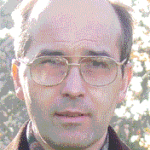
Perfect State Transfer Between Real Pure States

Given an undirected graph $G$, we consider the continuous time quantum walk on $G$, which is governed by the transition matrix $U(t)=exp(itM), t\in \mathbb{R},$ where $M$ is a real symmetric matrix such that $m_{j,k}=0$ if and only if ${j,k}$ is not an edge of $G$. A key task in quantum computing is the accurate transfer of one quantum state to another via such a continuous time quantum walk.

Pure states correspond to one-dimensional subspaces of $\mathbb{C}^n$, and are represented by unit vectors. We develop the theory of perfect state transfer (PST) between real pure states, with emphasis on the adjacency and Laplacian matrices as Hamiltonians of a graph representing a quantum spin network. We characterize PST between real pure states based on the spectral information of the Hamiltonian, and prove three fundamental results: (i) every periodic real pure state $x$ admits PST with another real pure state $y$, (ii) every connected graph admits PST between real pure states, and (iii) given any pair of real pure states $x$ and $y$ and any time $\tau$, there exists a real symmetric matrix $M$ such that $x$ and $y$ admit PST relative to $M$ at time $\tau$. We also characterize the graphs, and the associated real pure states, having the minimum possible PST time, for the adjacency and Laplacian matrix cases.

Joint work with Chris Godsil and Hermie Monterde.

Dr. Andre Leroy
Professor Emeritus
Universit´e d’Artois, France.

Research Interests: Ring theory, Matrix theory Read more
Achievements: Read more

Pseudo linear maps

A pseudo linear map is the analogue of a linear map but in the setting of a ring with a derivation or a σ-derivation. The definition was first given by N. Jacobson (1937) a few years after the formal introduction of skew polynomial rings by O. Ore (1937). We can see these maps in the frame of representation (algebras, groups, Hopf algebras). We will analyze the similarities and the differences between pseudo linear maps and linear maps. Many natural analogues of linear classical topics will be mentioned. The strong connections between pseudo linear maps and evaluation of skew polynomials and some of its consequences will be given. We will also cover the case of different notions of evaluations for multivariate skew polynomials and show that they are connected with pseudo multilinear maps. These will be applied to answer an open question in a much more general frame than the original setting.

Dr. Yonghui Liu
Professor
Shanghai University of International Business and Economics, China

Research Interests: Matrix Theory, Ranking, Maximum Likelihood, Regression Modeling, Applied Mathematics, Econometrics, Statistics, VAR, Matrix, Matrices Read more
Achievements: Prof. Yonghui Liu is a Professor/Director of Digit Economy and Trade Lab in Shanghai University of International Business… Read more

Dr. Lina Mallozzi
Professor
Universita' degli studi di Napoli, Federico ii, Docenti

Research Interests: Game Theory, Mathematics for Economics, Optimization Theory Read more
Achievements: Lina Mallozzi received her master's degree in Mathematics in 1987 and the PhD in Applied Mathematics and Computer… Read more

On bimatrix games having pure Nash equilibria

We explore the existence of pure Nash equilibria in bimatrix games, that are equilibria where each player deterministically plays one pure strategy.

Every finite noncooperative two-player nonzero-sum game, also called as a bimatrix game, has at least one Nash equilibrium in the mixed strategy extension, i.e. when players may play probability distributions over their available strategies. Special classes of games have been studied where a pure Nash equilibrium is guaranteed to exist, for example, subclasses of symmetric games, potential games ([2]), symmetric potential games and aggregative games.
Shapley ([3]) showed that a matrix game, namely a two-player zero sum game, has a pure saddle point if every 2$\times$2 subgame has one. For bimatrix games, however, a similar condition on 2$\times$2 subgames is not sufficient for the existence of pure Nash equilibria.

We prove the existence of pure Nash equilibria for symmetric bimatrix games that have the quasi harmonicity property ([1]) and quasiconcavity at the diagonal property. We also show existence of pure Nash equilibria for some classes of bimatrix games, not necessarily symmetric, by generalizing the results of Shapley. Some illustrative examples and directions for future work are discussed as well.

References

[1] L. Mallozzi and A. Sacco, Stackelberg-Nash equilibrium and quasi harmonic games, Annals of Operations Research, 318, 1029–1041, 2022.

[2] D. Monderer and L. S. Shapley, Potential games, Games and Economic Behavior, 14, 124–143, 1996.

[3] L. S. Shapley, Some topics in two-person games. In: Dresher, M., Shapley, L. S. and Tucker, A. W. (eds), Advances in game theory, Princeton University Press, Princeton, 1–28, 1964.

Dr. David Raj Micheal
Assistant Professor
Vellore Institute of Technology, Chennai, India

Research Interests: Matrix theory, generalized inverses, matrices and graphs Read more
Achievements: Read more

Stress Centrality in Weighted Networks: An Algorithmic Adaptation with Applications to Fuzzy Networks

Centrality measures play a crucial role in identifying the most influential or structurally important
nodes within a network. Among various centrality measures such as degree, betweenness and
closeness, stress is another important metric that has been previously defined and studied
for undirected and unweighted graphs, where all connections are treated equally. However,
real-world networks are rarely unweighted; they often contain edges with varying intensities,
capacities, or costs, which carry meaningful information about the relationships among entities.
Hence, analyzing centrality in weighted networks has become an essential step toward realistic
and comprehensive network analysis. This paper extends the concept of stress centrality to
weighted networks, where edges possess varying strengths, allowing the shortest paths to be
evaluated based on edge weights or costs. Such an approach enhances the understanding of
node significance in weighted environments. Furthermore, the concept of stress centrality has
been introduced in fuzzy networks, offering a novel framework to assess node importance
in environments characterized by uncertainty. To validate the proposed approach, numerical
examples and comparative analysis are presented, demonstrating the effectiveness of the method.

Dr. Bojan Mohar
Professor
Simon Fraser University, Canada

Research Interests: Topological Graph Theory, Graph minors, Graph coloring, Algebraic graph theory, Graph algorithms Read more
Achievements: Bojan Mohar is a professor at Department of Mathematics, Simon Fraser University, Canada. Topological Graph Theory, Graph minors,… Read more

Spectrally symmetric orientations of graphs

The Hermitian adjacency matrices of digraphs based on the sixth root of unity were introduced in [B. Mohar, A new kind of Hermitian matrices for digraphs, Linear Alg. Appl. (2020)]. They appear as the most natural choice for the spectral theory of digraphs. For undirected graphs, the spectrum of the adjacency matrix is symmetric around 0 if and only if the graph is bipartite. However, in the directed case, this is no longer true. There are orientations of nonbipartite graphs which are spectrally symmetric. Our main result concerns the extremal problem of maximizing the density of spectrally symmetric oriented graphs. The maximum possible density is shown to be between 13/18 and 10/11. This is joint work with Saieed Akbari, Jonathan Aloni, Maxwell Levit, and Steven Xia.

Dr. Samir K. Neogy
Professor
Indian Statistical Institute, Delhi, India

Research Interests: Applied Statistics, Linear Programming, Nonlinear Programming, Non-cooperative games, Stochastic games, Statistical Quality Control, Six Sigma, Quality Management. Read more
Achievements: Based on his research and teaching interests, in applied statistics and matrix methods, he has published several research… Read more

A walk on three decades of Copositivity and its application in Optimization theory

Copositivity has gained popularity in last three decades as a key concept for optimization, which can handle nonconvex, mixed-integer, linear complementarity problem and polynomial optimization problems. Copositivity plays a role in quadratic optimization, where the set of
copositive matrices can be used to obtain relaxations on the unknown optimal value. The notion of copositivity of a matrix is well known in the area of linear complementarity problems (LCP) in the context of existence results and results on the successful termination of Lemke’s algorithm. In the last decades there has been an increasing interest in this property of a matrix, and in linear optimization problems over the cone of copositive matrices. Several articles about the properties of the set of copositive matrices are proposed in the last sixty years. Much less is known about the copositive plus matrices, fully copositive matrices which form a subset of the copositive matrices. We discuss various open problems related to these classes. Further we discuss almost copositive matrices, almost fully copositive matrices, copositive matrices of exact order k and future direction of research.

Dr. Sukanta Pati
Professor
Indian Institute of Technology Guwahati, India

Research Interests: Spectral Graph Theory, Linear and Multi-linear Algebra Read more
Achievements: He is a member of the editorial board of reputable journals like Linear Multilinear algebra. Also has a… Read more

Dr. Simo Puntanen
Visiting Professor
Tampere University, Finland

Research Interests: Matrix methods in statistics, Generalized inverses, Canonical correlations Read more
Achievements: He was a Senior Researcher of the Academy of Finland in 1992--1995. His main research interest lies on… Read more

Taking a further look at some results in C.R. Rao's paper in Sankhya in 1971

In 1971, in his seminal paper [1], entitled Unified theory of linear estimation, C.R. Rao considered the properties of best linear unbiased estimators, BLUEs, in the general linear model $M(V) = \{ y, X\beta, V \}$, where $V$ refers to the covariance matrix of the observable random vector $y$ and $X$ is the model matrix. Both $X$ and the nonnegative definite covariance matrix $V$ are known. Citing Rao, “In Section 5 [of his paper] we raise the question of identification of $V$ given the class of BLUE’s of all estimable functions”. It is precisely Section 5 of Rao’s paper which is in our focus. In particular, we will take a good look at Rao’s Theorems 5.2 and 5.3 which answer the following question: Given the model $M(V_{0}) = \{y, X\beta, V_{0} \}$, how to characterize the set of all covariance matrices $V$ such that every representation of the BLUE of $X\beta$ under $M(V_{0})$ remains BLUE under $M(V)$. Our attempt is to provide some new insight into this problem area.

This talk is based on joint work with Stephen J. Haslett, Jarkko Isotalo and Augustyn Markiewicz.

[1] C. R. Rao. {\em Unified theory of linear estimation}. Sankhya Ser.~A, 33:371–394, 1971.

Dr. T. E. S. Raghavan
Emeritus Professor
University of Illinois at Chicago, USA

Research Interests: Game theory, Linear and non-linear programming, matrix theory, applied statistics, operations research Read more
Achievements: Being a dynamic emeritus professor at the University of Illinois at Chicago has published more than 60 remarkable… Read more

Scaling of multi dimensional matrices and their applications to biological, statistical and social science data

Scaling problems appear in military budget allocation, Estimation of Markov Transition probabilities that are doubly stochastic, improving accuracy in Gaussian elimination, Scaling in transportation planning via gravity models, arriving at maximum likelihood estimates via scaling in discrete multivarite statistical analysis. etc.The following existence theorem (R.B. Bapat and TES Raghavan (1989), J Lin Alg Appl , 114/115: 705-715) is central to this study:

Theorem: Let $K $ be a bounded non-empty polyhedron given by $$K = {π ∈ R^n : π ≥ 0, Cπ = b},$$ where $C = (c_{ij})$ is an $ m × n $ matrix and $ b ∈ R^m$ is a non-zero vector. Let $y ∈ K$. Then for any $x ≥ 0$ with the same zero pattern as $y$, there exist $ z_i > 0, i = 1, . . . ,m$ and there exists $ π ∈ K $ such that $$π_j = x_j \prod_{i=1}^m {z_{i}}^c_{ij}\quad i=1,\ldots m, j=1,2.\ldots n$$

Dr. Balaji Ramamurthy
Professor
Indian Institute Of Technology Madras, India

Research Interests: Complementarity problems on symmetric cones, spectral properties of non-negative matrices and their generalizations Read more
Achievements: He has published 14 research papers in reputed national and international journals. He has publications in linear algebra… Read more

Distance Laplacian matrices of connected graphs

In this talk, we shall present some results on distance Laplacian matrices of connected graphs.

Dr. T. S. S. R. K. Rao
Distinguished Professor
Shiv Nadar Institution of Eminence, Delhi NCR, India

Research Interests: Geometry of Banach spaces, Vector Measures, Tensor Product spaces, L^1-predual theory, Choquet theory, Function algebras, and approximation theory Read more
Achievements: Prof. TSSRK Rao had his undergraduate education in Vijayawada. He obtained B.Sc. and M.Sc. from Andhra University and… Read more

Dr. Dietrich von Rosen
Visiting Professor
Linköping University, Sweden

Research Interests: Multivariate Analysis, Probability and Statistics, Regression Analysis, Mathematical Statistics and its applications Read more
Achievements: He received a PhD from Stockholm University (1986). He was adviser for 18 undergraduate (master) theses in Mathematical… Read more

Application of quadratic subspaces with application to covariance estimation in a multivariate normal distribution

Quadratic subspaces are useful, under a normality assumption, when estimating parameters in linearly structured covariance matrices when also their inverses are linearly structured. Different kind of applications will be considered.

Dr. Arumugam S.
Adjunct Professor
Ramco Institute of Technology, Tamil Nadu, India

Research Interests: Network Analysis, Graph Theory and its applications, Fuzzy logic and its applications to pattern recognition, Topology , Geometry… Read more
Achievements: He has more than 250 publications and more than 20 books. Most of these books are prescribed as… Read more

Dr. K. C. Sivakumar
Professor
Indian Institute of Technology Madras, India

Research Interests: Infinite Linear Programming, Generalized Inverses of Operators over Hilbert Spaces, Nonnegative Generalized Inverses, Generalizations of Matrix Monotonicity, Linear… Read more
Achievements: K. C. Sivakumar is a Professor at Department of Mathematics, Indian Institute of Technology Madras. He obtained his… Read more

The role of inverse nonnegativity/nonpositivity in Linear Complementarity Theory

There are many interesting results concerning the existence and uniqueness in the theory of the Linear Complementarity Problem (LCP) that are related to some notion of nonnegativity or nonpositivity of the matrices concerned. In this talk, first, I will present a survey of some of these results. This will be followed by a discussion of some new results obtained in this direction.

Dr. Sivaramakrishnan Sivasubramanian
Professor
Indian Institute of Technology Bombay, India

Research Interests: Matrix Theory, Graphs, Combinatorics, Combinatorial Optimization, Discrete Mathematics Read more
Achievements: Currently a professor at IIT Bombay, Sivaramakrishnan has published more than 25 research articles in reputed national and… Read more

Unimodality and peak location of the characteristic polynomials of two distance matrices of treesUnimodality and peak location of the characteristic polynomials of two distance matrices of trees

Unimodality of the normalized coefficients of the characteristic
polynomials of distance matrices of trees are known and bounds on the location of its peak (the largest coefficient) are also known. Recently, an extension of these results to distance matrices of block graphs was given. In this work, we extend these results to two additional distance-type matrices associated with trees: the Min4PC matrix and the 2-Steiner distance matrix. We show that the sequences of coefficients of the characteristic polynomials of these matrices are both unimodal and log-concave. Moreover, we find the peak location
of the coefficients of the characteristic polynomial of the Min4PC matrix of any tree on n vertices. Further, we show that the Min4PC matrix of any tree on n vertices is isometrically embeddable in $\mathbb{R}^{n-1}$ equipped with the $\mathcal{l}_1$-norm.

This is joint work with Rakesh Jana and Iswar Mahato.

Dr. Murali K. Srinivasan
Professor
Indian Institute of Technology Bombay, India

Research Interests: Combinatorics, Graph theory Read more
Achievements: Murali K. Srinivasan is working as a professor at the Indian Institute of Technology Bombay. He has published… Read more

Prof. Ambat Vijayakumar
Emeritus Professor
Cochin University of Science and Technology

Research Interests: Graph theory, spectra and energy of graphs, power domination, product graphs Read more
Achievements: Prof. Ambat Vijayakumar is the president of The Academy of Discrete Mathematics and Applications. He has published more… Read more

Some spectral aspects of split graphs Graphs

A graph G is a split graph, if its vertex set can be partitioned into an independent set and a clique. It is known that the diameter of such graphs is at most 3. Here, we shall first discuss a complete classification of the connected bidegreed 3-extremal split graphs and report some recent results. Also, we construct certain families of non-bidegreed 3-extremal split graphs.

In the second part, we obtain sharp bounds for the distance spectral radius of split graphs. We find the distance spectral radius of all biregular split graphs of diameter 2 and some biregular split graphs of diameter 3.

This is a joint work with Felix Goldberg, Steve Kirkland and Anu Varghese.

International Conference on Linear Algebra and its Applications

December 17 - 20, 2025

Participants

If the participants do not belong to the PRC Category or if participants are not required to visit ‘Restricted’ or ‘Protected’ areas in India, or areas affected by terrorism, militancy, extremism, etc., then there is no need to take prior permission.

  • Click here to avail the information about the Event clearance and Political clearance from MHA/MEA, Govt. of India
  • The NOC Letter from the Ministry of Home Affairs, Govt. of India may be downloaded here: https://conference.mha.gov.in/events/NOC_letter.pdf.
  • To download the screenshot of guidelines for security/event clearance click here.

Please note that the participants (requiring accommodation) who register before November 15, 2025 will be prioritized during the allotment of the accommodation.

List of Participants

1. Dr. Parveen Indian Institute of Technology Guwahati, India
2. Dr. Akansha . The LNMIIT Jaipur, India
Talk on: Graph Constructions and Operations Satisfying the ACK Conjecture
3. Mr. Shivaprakasha . Indian Institute of Technology BHU, Varanasi, India
Talk on: Spectral Characterization of Neighborhood Matrix for Complete Multipartite Graphs and Regular Graphs
4. Ms. Anoosha . Manipal Institute of Technology, MAHE, Manipal, India
Talk on: Suitable and Clean Nearrings
5. Dr. Harshitha A Manipal Institute of Technology Bengaluru, India
Talk on: Vertex Energy of Splitting Graphs and Shadow Graphs
6. Dr. MANISH AGGARWAL Indian Institute of Technology Jodhpur, India
Talk on: Ranking Obstacles in Adopting Renewable Energy through a Data-Driven Approach
7. Dr. Rafikul Alam Indian Institute of Technology Guwahati, India
8. Mr. Askar Ali M IISER Thiruvananthapuram, India
Talk on: Simultaneous triangularization over max-algebras
9. Mr. MUSHTHAQ ALI A P AMBALAVAN POIKAYIL Vellore Institute of Technology, Vellore, India
10. Ms. Deekshitha Vivek Anchan Manipal Institute of Technology, MAHE, Manipal, India
Talk on: Stress of some molecular graphs and its application
11. Ms. ANJITHA ASHOKAN NATIONAL INSTITUTE OF TECHNOLOGY CALICUT, India
Talk on: Eccentricity spectral properties of $mathcal{C}$-graphs
12. Mr. Sharath B Manipal Academy of Higher Education, Manipal, India
Talk on: Bounds for Energy of a graph with Self-Loops
13. Mr. Shreehari B Manipal Institute of Technology (MAHE) Manipal, India
Talk on: Construction of LCD codes by Extension
14. Dr. Pallavi B Dr. G Shankar Government Women's First Grade College and P.G Study Center, Ajjarakadu, Udupi, India
15. Mr. Tem Jen Sang Ba Indian Institute of Technology (ISM) Dhanbad, India
Talk on: Majorization between symplectic spectra of positive definite matrices
16. Ms. Amrutha Rose Baby National Institute Of technology, calicut, India
17. Dr. Mojtaba Bakherad Univesity of Sistan and Baluchestan, Iran, Islamic Republic of
18. Ms. BIJOYA BARDHAN Gurucharan College, Silchar, India
Talk on: A generalized approach to the extremal inverse eigenvalue problem for a class of symmetric matrices
19. Prof. Sasmita Barik Indian Institute of Technology Bhubaneswar, India
20. Mr. Sridhara Kumar Barik Manipal Academy Of Higher Education, Bengaluru., India
Talk on: Graph with respect to g-small element in a lattice
21. Ms. Nikita Behera IIT(BHU), India
22. Ms. Archana Bengeri Manipal Institute of Technology Bengaluru, India
Talk on: On dominant multiset dimension of some networks
23. Ms. Anjali Beniwal Indian institute of technology Kharagpur, India
Talk on: Connection between intersection of Linear Time-Invariant Behaviors and Greatest Common Right Divisors of polynomial matrices
24. Dr. Abraham Berman Technion-Israel Institute of Technology, Israel, Israel
25. Ms. Vattikuti Bhagyalakshmi National Institute of Technology Andhra Pradesh, India
Talk on: On Polar Decomposition of Dual Matrices
26. Mr. Koushik Bhakta Indian Institute of Technology, Guwahati, India
Talk on: Perfect state transfer in Grover walks on association schemes and distance-regular graphs
27. Ms. Keerthi Bhat Mangalore University, India
28. Dr. Archana Bhat Sreenidhi University Hyderabad, India
Talk on: Some Results on Combined Matrices via Generalized Inverses
29. Dr. Preenu C S University of Kerala, India
30. Mr. Ramendra Singh Chauhan Indian Institute of Technologu Guwahati, India
31. Dr. Bharat Pratap Chauhan Shiv Nadar Institution of Eminence, Delhi-NCR, India, India
32. Mr. Aditya Chauhan Indian Institute of Technology, Bhubaneswar, India
33. Ms. Pranisha Chettri Sikkim Manipal Institute of Technology, Sikkim Manipal University, India
Talk on: On $mu^ast$-Topological Vector Spaces
34. Ms. Alisha D'souza St. Joseph's University, Bangalore, India
35. Dr. Sunil Das ICFAI Foundation for Higher Education, Hyderabad, India
Talk on: Sign pattern matrices associated with cycle graphs that require algebraic positivity
36. Dr. Susmita Datta University of Florida, Gainesville, United States
37. Dr. Biswajit Deb Sikkim Manipal University, India
38. Ms. SWAGATA DUTTA IIT Kharagpur, India
39. Ms. Reshma E Kannur University, India
Talk on: Matrix Representation of Pseudo-Ordered Sets and Pseudo-Ordered Groups
40. Dr. N. Eagambaram Government of India, India
41. Dr. Shaun Fallat University of Regina, Canada
42. Ms. Geeta G Ramshette Manipal Institute of Technology Bengaluru, India
Talk on: Fault-tolerant dominant metric dimension of generalized friendship graphs
43. Mr. SAJAL GHOSH Indian Statistical Institute, India
Talk on: On solving a larger subclass of linear complementarity problems by Lemke’s method
44. Mr. Subhadip Giri Indian Institute of Technology Bhubaneswar, India
45. Ms. Gopika Govind National Institute of Technology Calicut, India
Talk on: On the non-zero divisor graph of the Hamilton quaternions over $mathbb Z_{2^n}$
46. Dr. Neha Gupta Shiv Nadar Institution of Eminence, India
47. Dr. Mahendra Kumar Gupta Indian Institute of Technology Bhubaneswar, India
Talk on: Minimization of Impulses and Column Regularization in Descriptor Systems via Output Feedback
48. Dr. Shrinath Hadimani Manipal Institute of Technology, MAHE, Manipal, India
49. Ms. Shahistha Hanif Manipal Institute of Technology, India
Talk on: The Rainbow Neighborhood Number of Graph Products
50. Prof. Stephen Haslett Massey University, New Zealand
51. Dr. Aditi Howlader Indian Institute of Technology Madras, India
Talk on: The full P-vertex problem for unicyclic graphs
52. Dr. Jeyaraman I National Institute of Technology Tiruchirappalli, India
53. Prof. Surender Kumar Jain Ohio University, United States
54. Ms. Sakshi Jain Savitribai Phule Pune University, India
55. Dr. Sachindranath Jayaraman IISER Thiruvananthapuram, India
Talk on: Quaternion matrix polynomials: location of eigenvalues
56. Mr. Ayyanar K National Institute of Technology Karnataka, India
57. Dr. SELVAKUMAR K Anna University, Chennai, University College of Engineering, Nagercoil, India
58. Mr. AJAY THARSAN K PSG COLLEGE OF ARTS & SCIENCE, India
59. Ms. Maithri K Manipal Institute of Technology, MAHE, Manipal, India
Talk on: Additive Character Sum Identities over Finite Fields
60. Mr. Shivarama K N MIT, manipal, India
Talk on: Known-Plaintext Attack on RRSC-128/64-V1
61. Mr. MOHANA K S Mangalore University, Mangalore, India
62. Ms. Neela K S Prasaana school of public health, India
63. Ms. Gopika K V National Institute of Technology Puducherry, India
Talk on: Evolution of the CMRH method: A comprehensive survey
64. Ms. Madhumitha K V Manipal Institute of Technology, Manipal, India
Talk on: On the Lanzhou Eigenvalues of Graphs
65. Dr. Monu Kadyan Tsinghua University, China
Talk on: A generalization of Ramanujan's sum over finite groups
66. Dr. Debajit Kalita Tezpur University., India
Talk on: Bicyclic graphs with strong reciprocal eigenvalue property
67. Mr. Akash Kalita Indian Institute of Technology, Guwahati, India
Talk on: State Transfer on Quadratic Unitary Cayley Graphs
68. Dr. Mounesha Kantli Alva's Institute of Engineering and Technology, Moodbidri, India
69. Ms. Banita Katuwal Sri Sathya Sai Institute of Higher Learning, India
70. Dr. Babushri Srinivas Kedukodi Manipal Institute of Technology, Manipal, India
71. Dr. Umashankara Kelathaya Manipal Institute of Technology, MAHE, Manipal, India
72. Mr. MOHAMMAD WAQUAS KHADIM INTEGRAL UNIVERSITY LUCKNOW, India
73. Mr. Nafees Khan Khawaza Moinuddin Chisti Language University Lucknow, India
74. Prof. Apoorva Khare Indian Institute of Science (Bangalore, India), India
75. Dr. Stephen Kirkland University of Manitoba, Canada, Canada
76. Mr. K KRISHNAN UNIVERSITY OF KERALA, India
Talk on: Absolutely norm attaining Quasi-hyponormal Operators
77. Ms. Geethanjali KS Yenepoya deemed to be university bengaluru, India
78. Dr. Ravinder Kumar DEI DAYALBAGH, India
Talk on: Characterizations and Bounds for the weighted sums and products of k largest singular values of matrices
79. Ms. Shweta Kumari Indian Institute of Technology, Patna, India
80. Prof. André Leroy Artois University, France
81. Ms. Hemalatha M National Institute of Technology Karnataka, India
82. Ms. Akhitha M S University of Kerala, India
83. Mr. CHIKKAM MACHARA VERRIYYA National Institute of Technology, Andhra Pradesh, India
84. Mr. CHIKKAM MACHARA VERRIYYA RGUKT - Nuzvid & NIT-Andhra Pradesh, India
85. Mr. CHIKKAM MACHARA VERRIYYA RGUKT - Nuzvid & NIT - Andhra Pradesh, India
86. Mr. Sangam Madabhavi Manipal Institute of Technology, MAHE, Manipal, India
Talk on: Energy and Sombor energy of hypergraphs via matrix
87. Dr. Iswar Mahato Indian Institute of Technology Madras, India
Talk on: The full P-vertex problem for bicyclic graphs
88. Prof. Lina Mallozzi University of Naples Federico II, Italy
Talk on: On bimatrix games having pure Nash equilibria
89. Ms. Varsha Mallya Manglore University, India
90. Dr. Amrita Mandal Birla Institute of Technology Mesra, India
Talk on: Spread of two-dimensional quantum walks in ordered and disordered scenarios
91. Mr. Surajit Mandal Ramakrishna Mission vivekananda Centenary College, Rahara, India
92. Mr. Deepak Maria Singh Vellore Institute of Technology, India
93. Dr. Mika Mattila Tampere University, Finland
94. Mr. Rajesh Maurya Sardar Bhagat Singh Govt. Post Graduate College Rudrapur, U.S. Nagar, Uttarakhand, India
95. Mr. Paritosh Maurya Indian Institute of technology (BHU), India
96. Mr. Adithya Mayya Manipal institute of technology, India
97. Ms. Megha Megha Mangalore university, India
98. Ms. Megha v Megha v Mangalore university, India
99. Mr. Basit Auyoob Mir SRM University AP, India
100. Mr. prashant mishra indian institute of technology Delhi, India
101. Ms. Sarojini Mohapatra National Institute of Technology Rourkela, Odisha, India
Talk on: Quantum walks on finite and bounded infinite graphs
102. Prof. Bojan Mohar Simon Fraser University Burnaby, BC, V5A 1S6 Canada, Canada
103. Mr. Madhab Mondal Indian Institute of Technology, Guwahati, India
Talk on: A $q$-analogue of the distance matrix of a tree with matrix weights
104. Mr. Debabrota Mondal Indian Institute of Technology, Bhubaneswar, India
105. Dr. Abhilash N Thiagarajar College of Engineering, India
Talk on: Units in Group Algebras of Type-III Generalised Heisenberg Groups
106. Ms. Sinchana N Manipal Institute of Technology, India
Talk on: On Spectral Properties of Graphs with Selfloops under Symmetric Division Deg Index and its Inverse
107. Dr. Sivaranjani N U SRM Institute of Science and Technology, Ramapuram, India
Talk on: xplicit Unit Group Descriptions for Group Algebras of O(2,p)
108. Dr. SACHIN NAIK Manipal Institute of Technology, Manipal, India
Talk on: Norm Inequalities for Complementable Operators and their Schur Complements
109. Mr. Prabhudatta Nayak Utkal University ,odisha, India
110. Ms. N Aishwarya Nayak Manipal Institute of Technology, MAHE, India
Talk on: Join Standard Graph of a Lattice
111. Prof. Samir K Neogy Indian Statistical Institute Delhi Center, India
112. Ms. Gadasanda Niharika Sardar Vallabhbhai National institute of technology Surat, India
113. Ms. Swornalata Ojha National Institute of Technology Rourkela, India
Talk on: q-Laplacian State Transfer on Graphs with Involutions
114. Mr. Nagaraja P Manipal Institute of Technology, MAHE , Manipal, India
Talk on: On the Eigenvalues of the Seidel Matrix
115. Mr. Prakash P Manipal Institute of Technology, India
116. Dr. Gayathri P National Institute of Technology Karnataka, Surathkal, India
Talk on: Generalized rotundity and best approximation properties in Banach spaces
117. Mr. Abhishek P G St Aloysius College, Elthuruth, India
118. Mr. Venkatesh P S Manipal Institute of Technology Bengaluru, India
Talk on: On s-edge metric dimension
119. Ms. Mamoni Paitandi National Institute of Technology Jamshedpur, India
Talk on: Descriptor Systems Feedback Design: Admitting Arbitrary Initial Conditions and Index Reduction
120. Dr. Hiranmoy Pal National Institute of Technology Rourkela, India
Talk on: Real state transfer on edge perturbed graphs with generalised clusters
121. Mr. Sovrin Pal NIT MEGHALAYA, India
Talk on: On sign patterns of fully semimonotone matrices of order up to 3
122. Mr. Sirshendu Pan Indian Instiute of Technology, Guwahati, India
Talk on: Winners in Graphs
123. Dr. Ashutosh Pandey Manipal University Jaipur, India
124. Ms. Smrati Pandey Indian institute of technology (BHU), India
Talk on: Spectral Analysis of Eccentricity Matrix for One-Point-Corona of Graphs
125. Mr. Prajwal Panth KIIT Deemed to be University, India
Talk on: Efficient Matrix Singularity Detection via Flip Invariance and Zero Sub-Matrix Theorems
126. Ms. Shivani Parab Birla Insitute of Technology and Science Pilani, K K Birla Goa campus, India
127. Mr. SOURABH PARADESHI MANIPAL INSTITUTE OF TECHNOLOGY, BENGALURU, India
Talk on: The Subgraph Access Matrix of a Graph
128. Ms. Pranjal Parashar IIT BHU, Varanasi, India
129. Ms. Samrin Pathan Savitribai Phule Pune University, India
130. Prof. Sukanta Pati Indian Institute of Technology Guwahati, India
131. Dr. Rashmirekha Patra Sambalpur University Institute of Information Technology, India
Talk on: EXTENDED MULTI COURANT BRACKET AND CONFORMAL MULTI DIRAC STRUCTURE
132. Ms. SWETA PATRA Indian Institute of Technology Madras, India
Talk on: The $M$-matrix group inverse problem for star networks
133. Mr. Rahul Paul National Institute of Technology Silchar, India
134. Ms. DHASHNA T PILLAI INDIAN INSTITUTE OF EDUCATION AND RESEARCH THIRUVANANTHAPURAM, India
Talk on: Maximum principles for matrix-valued regular functions of a quaternionic variable.
135. Mr. AKASH PRADHAN Visvesvaraya National Institute of Technology (VNIT), Nagpur, India
Talk on: Sufficient Condition for the Stability of a Finite System of Polynomials
136. Mr. Sailendra Pradhan National Institute of Technology Andhra Pradesh, India
Talk on: Comparison Results for Pseudo-weak splittings of Bounded Linear Operators
137. Ms. Pragathi Manglore university, India
138. Ms. Samapti Pratihar Indian Institute of Technology Madras, India
Talk on: Inverse Z-matrices with the bi-diagonal south-west structure
139. Prof. Abraham Punnen Simon Fraser University, Canada
140. Dr. Simo Puntanen Tampere University, Finland
Talk on: Taking a further look at some results in C.R. Rao's paper in Sankhya in 1971
141. Ms. Abinaya R Vellore Institute of Technology, India
142. Ms. Renjini R J University of Kerala, India
Talk on: Ky Fan Pseudospectra: A Generalization of Classical and Nuclear Pseudospectra
143. Ms. Durga R S Indian Institute of Technology Palakkad, India
144. Ms. Ramsujithra R S University of Kerala, India
Talk on: LDPC spectral codes from graphs
145. Mr. Pavankumar Raickwade Indian Institute of Technology Madras, India
146. Mr. Juganta Rajkhowa Tezpur University, India
147. Prof. Balaji Ramamurthy Indian Institute of Technology Madras, India
148. Mr. Hanumant Rana Sikkim Manipal University, India
149. Mr. PARTHA RANA Indian Institute Of Technology, Guwahati, India
Talk on: Irreducible Combinatorially Symmetric Sign Patterns Requiring a Unique Inertia
150. Ms. Bhagyajyothi Rao Manipal Academy of Higher Education, India
Talk on: Direct and indirect effects of Multidimensional Poverty on Child Wasting in India (2019-21): A District Level Spatial Analysis
151. Mr. TAPON KUMER RAY VIT-AP University, India
152. Dr. Dietrich von Rosen Linköping University, Sweden
153. Mr. Shashank S National Institute of Technology Karnataka, India
154. Dr. Arumugam S Ramco Institute of Technology, Tamil Nadu, India
155. Ms. Niveditha S Manipal Institute of Technology, Manipal, India
Talk on: On the stress centrality of the middle and central graph of a graph
156. Ms. VIDYA S Manipal institute of technology bengaluru, India
157. Mr. Shashwath S Shetty Manipal Institute of technology, MAHE, Manipal., India
Talk on: On the Spectral Radius of DBEA Tensors of Uniform Hypergraphs
158. Dr. Manideepa Saha National Institute of Technology Meghalaya, India
Talk on: Sign Patterns of almost semimonotone matrices
159. Mr. Subham Saha National Institute of Technology Meghalaya, India
Talk on: Linear operators preserving cone type matrix majorization
160. Dr. P Sam Johnson National Institute of Technology Karnataka, Surathkal, India
Talk on: A formula of $A$-spectral radius for $A^{frac{1}{2}}$-adjoint operators on semi-Hilbertian space
161. Mr. Aniruddha Samanta Birla Institute of Technology, Mesra, India
162. Mr. Muntala Seidu Zinotec Enterpries, Ghana
163. Dr. Anirban Sen Silesian University in Opava, Czech Republic
164. Ms. Prerna Sharma Chaudhary devi lal University, India
165. Mr. Piyush Sharma Dr. B. R. Ambedkar National Institute of Technology Jalandhar, India
Talk on: A NEW KIND OF Aα MATRIX FOR MIXED GRAPHS
166. Mr. Subrahmanya Shenoy Manipal Institute of Technology, MAHE, Manipal, Karnataka, India
Talk on: Spectral Properties of Graphs Associated to Finite Lattices with respect to their Ideals
167. Ms. Swasthi Shree Mangaluru University, India
168. Dr. Rakesh Kumar Shukla Shoolini University, Solan, H.P., India
169. Mr. Amit Shukla University of Allahabad, India
170. Dr. Shyamsunder shyamsunder SRM University Delhi-NCR, Sonepat, India
171. Mr. Suryanshu Singh Indian Institute of Technology (BHU), India
172. Mr. Aditya Singh Indian Institute of Information Technology Allahabad, Prayagraj., India
Talk on: Spectral properties of distance matrices of power graph over metacyclic group
173. Dr. Sarishti Singh BITS Pilani, K K Birla Goa Campus, India
174. Dr. Bibekananda Sitha NISER Bhubaneswar, India
Talk on: Dual core-EP generalized inverse and a new decomposition
175. Prof. Krishnan Sivasubramanian IIT Bombay, India
176. Mr. Vanapala Sreenivasa Rao Andhra University, India
177. Dr. Murali K Srinivasan Indian Institute of Technology Bombay, India
178. Mr. Eshwar Srinivasan indiqan Institute of Technology Guwahati, India
179. Ms. RINCY SUSAN RAJU UNIVERSITY OF KERALA, India
Talk on: n th-power-$ast$-paranormal operators
180. Dr. DIVYADEVI T Indian Instittute of Technology Madras, India
Talk on: Inertia and spectral symmetry of eccentricity matrices of certain bi-block graphs
181. Mr. Jitul Talukdar Indian Institute of Technology, Kharagpur, India
Talk on: On some Graphs determined by their Laplacian spectrum
182. Dr. Kurmayya Tamminana National Institute of Technology Andhra Pradesh, India
Talk on: Cone Preserving Properties of Moore-Penrose Inverse of Bounded Linear Operators
183. Ms. Divya Taneja Indian Institute of Technology Kharagpur, India
Talk on: Distance Spectrum of Reduced Power Graphs
184. Dr. Raghavan Thirukkannamangai E S University of Illinois at Chicago, United States, United States
185. Mr. MATHEW THOMAS St. Thomas College (Autonomous), Thrissur (/CUSAT), India
Talk on: Spectral Approximation of Continuous Self-Adjoint Linear Relations
186. Dr. Vamsinadh Thota National Institute of Technology Tiruchirappalli, India
Talk on: Geometric and Approximation Theoretic Aspects of Equability in Banach Spaces
187. Mr. Ujjal Timshina Indraprastha Institute of Information Technology, Delhi, India
188. Mr. Aditya Tyagi Indian Institute of technology gandhinagar, India
189. Ms. KAVYALAXMI UPADHYAYA Shri Madhwa Vadiraja Institute of Technology and Management, Bantakal, India
Talk on: Harmonious Coloring of some classes of directed cycles
190. Dr. Savitha V Srinivas Institute of Technology, Valachil, India
191. Mr. VIGNESH V Amrita Vishwa Vidyapeetham, Coimbatore, India
192. Prof. Murugan Veerapazham NITK Surathkal, India
193. Mr. Saggam venugopal Mahindra University, Hyderabad, India
194. Mr. Tikesh Verma National Institute of Technology Raipur, India
Talk on: Cayley Transform for Toeplitz and Dual Matrices
195. Ms. Mamta Verma Dr. B.R. Ambedkar NIT Jalandhar, India
Talk on: New improved lower bounds for Zagreb indices of graphs
196. Prof. Ambat Vijayakumar Cochin University of Science and Technology Cochin, India
197. Ms. Dhanyashree Vinay Manipal Academy of Higher Education, India
Talk on: The ν-prime ideal sum graph of a nearring
198. Ms. Shweta Yadav Shiv Nadar Institution of Eminence, India
Talk on: On the Properties of Solution Set of Absolute Value Equations

International Conference on Linear Algebra and its Applications

December 17 - 20, 2025

Contact

If the participants do not belong to the PRC Category or if participants are not required to visit ‘Restricted’ or ‘Protected’ areas in India, or areas affected by terrorism, militancy, extremism, etc., then there is no need to take prior permission.

  • Click here to avail the information about the Event clearance and Political clearance from MHA/MEA, Govt. of India
  • The NOC Letter from the Ministry of Home Affairs, Govt. of India may be downloaded here: https://conference.mha.gov.in/events/NOC_letter.pdf.
  • To download the screenshot of guidelines for security/event clearance click here.

Please note that the participants (requiring accommodation) who register before November 15, 2025 will be prioritized during the allotment of the accommodation.

Contact us at

carams.mahe@gmail.com

Dr. K. Manjunatha Prasad

Coordinator, CARAMS

Quick Links

  • Home
  • About Us
  • Chapters
  • Team
  • Upcoming Events
  • Past Events
  • Contact Us

Explore

  • Places around Manipal
  • How to reach Manipal?

Connect With Us